
What Language Is This Audio? Top 8 Audio Language Identify Tools For You
To find out what language an audio clip is in, use an audio language detector that accepts a file upload or microphone input. Start with a clear section of speech, then check the result before moving on to transcription or translation.
Prerequisite: You have to need an accurate AI audio translator. Currently, many audio recognition tools rely on artificial intelligence recognition, so the accuracy can be over 99%, fully achieving the goal of recognizing audio language.
Therefore, I recommend using AudioTranscriber AI, which has been personally tested and has an accuracy of 100%, and can automatically filter out noise.
How to Identify the Language in an Audio Clip
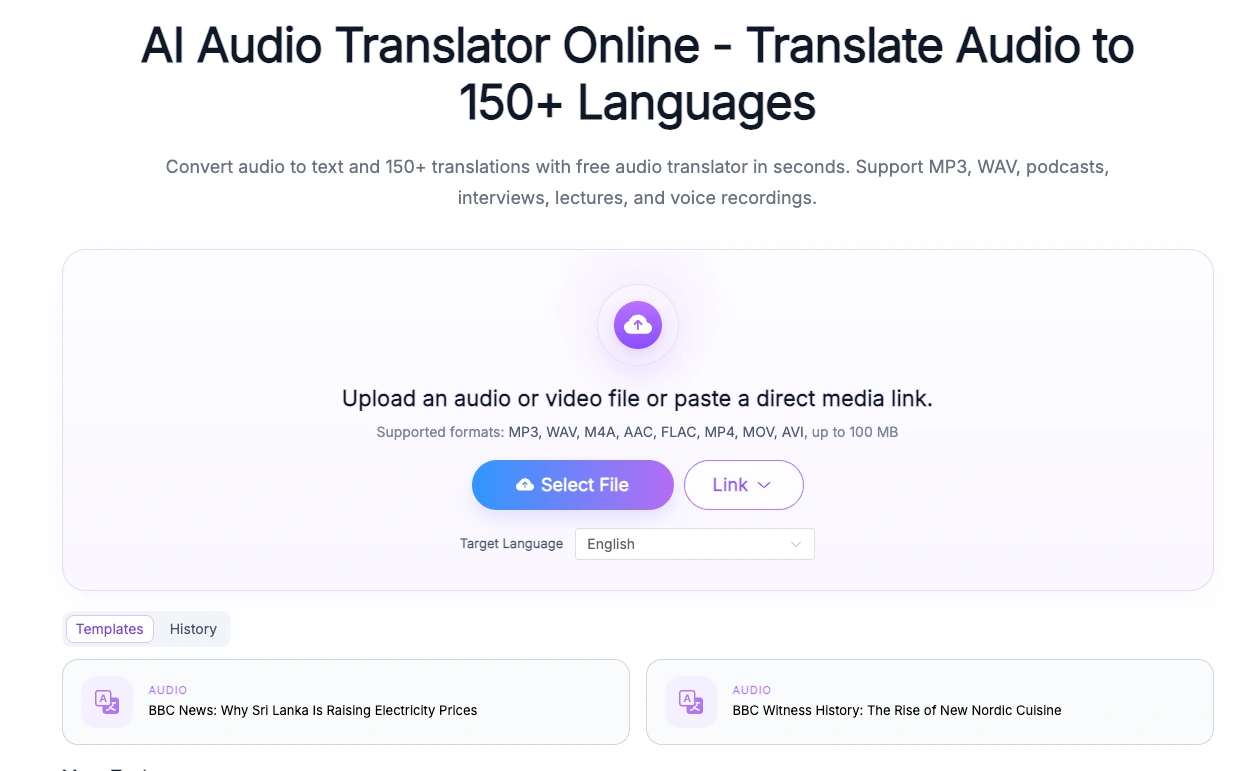
Firstly, open the Audio Translator AI, locate the audio translator, and follow the following steps to operate.
Choose a Clear Section of Audio
In order to obtain more accurate transcription results, it is recommended to choose audio clips with clear vocals and continuous speech, and try to avoid long periods of silence, obvious background music, and scenes where multiple people are speaking at the same time. It should be noted that different transcription tools may have different requirements for audio duration and input format, so do not consider the minimum audio duration specified by one tool as a universal standard for all tools.
Upload the File to Audio Translator
The usage of language detection varies in different scenarios. If it is a local audio or video file, you can choose a language detection tool that supports file upload; If there is only the sound being played, it is more suitable to use tools that support microphone input. For content with uncertain source languages, it is recommended to prioritize tools that support automatic language detection, so that there is no need to fill in unknown source languages in advance before recognition. If the article introduces specific products or tools, it is best to combine them with real operating procedures to explain the usage methods, and combine them with actual operation screenshots, so that readers can intuitively see the usage process of each step.
Review the Detected Language
When viewing language detection results, you can first confirm the language name returned by the tool, and combine it with the transcription preview or confidence information provided by the tool for auxiliary judgment. These pieces of information can help you further confirm whether the recognition results are reasonable, but cannot completely replace manual verification. Especially in situations where the audio quality is poor, there is background noise, accents are obvious, or multiple people are talking, automatic detection may result in misjudgment. Therefore, the final confirmation should still be based on the actual audio content, and the "detection result" should not be directly regarded as a definite answer.
How to Check Whether the Language Detection Is Correct
Often, after detecting which language it is for the first time, we cannot draw conclusions directly and need to verify it through different methods. The common way is to upload a clear audio of the same speaker and observe whether the results can be consistent.
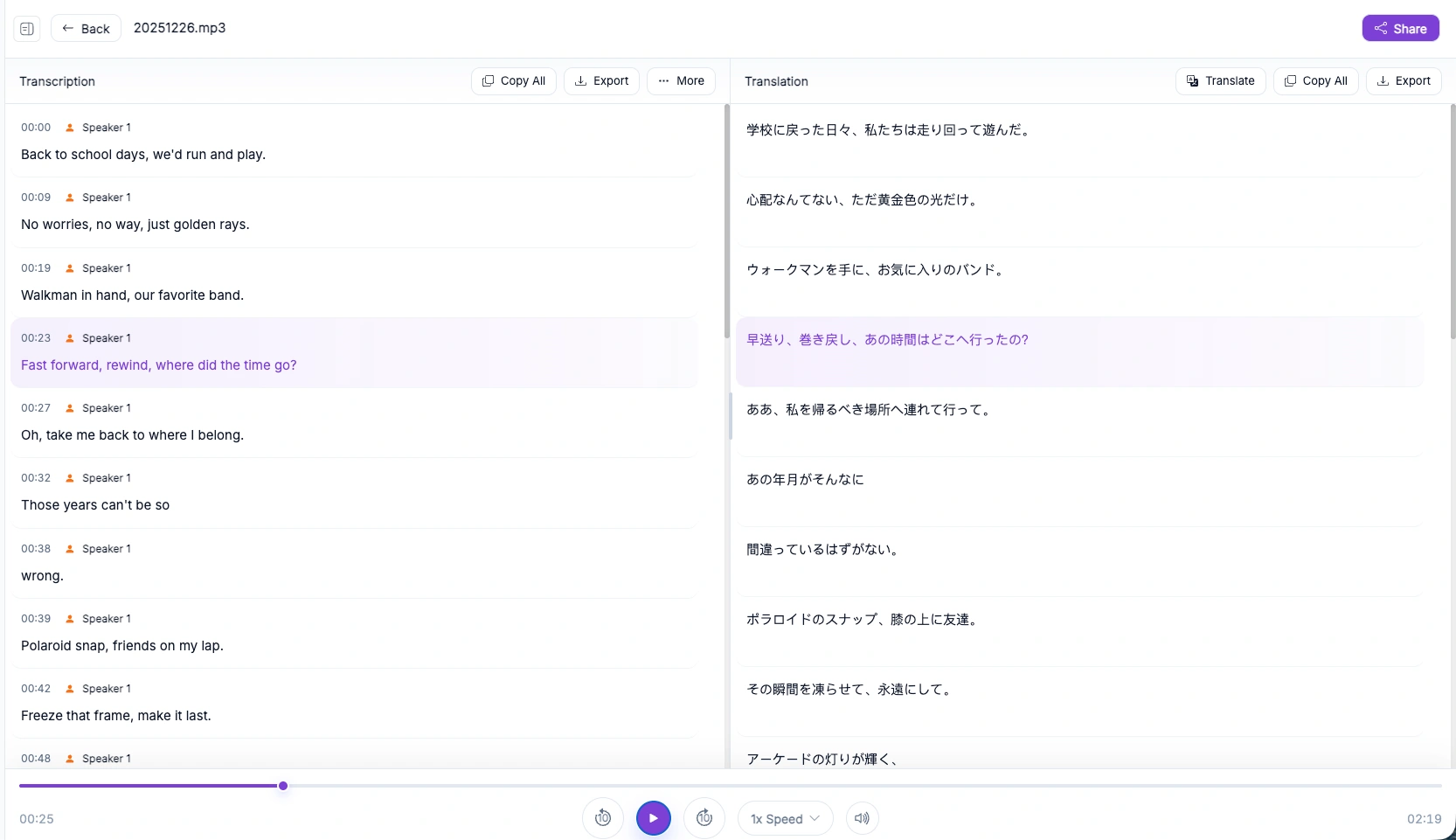
Of course, Audio Transcriber AI itself provides transcribed text content, and you can also further verify whether it is consistent with the audio content by combining transcripts.
If there are still doubts, you can replace other tools for cross validation, or ask someone familiar with the language to assist in judgment. Finally, cross validation was conducted through multiple results to verify the accuracy of the translation. Never rely solely on one answer to determine the outcome.
Briefly summarize how to check the accuracy of language:
- Change to a clear audio and check if the results are consistent.
- View transcription preview to assist in checking the original language content.
- Replace tools or seek manual verification if necessary.
- Maintain uncertainty when there is a conflict of results and do not force conclusions.
Why Can't the Tool Identify the Language?
Sometimes, we may not be able to detect the corresponding language through tools, but this is not due to the inaccuracy of the tools themselves, and may also be related to the quality, clarity, content, and range of language support of the audio. In general, when encountering such situations, it is necessary to conduct investigations based on the actual situation and then choose an appropriate approach.
Usually, if language detection is inaccurate, there may be several reasons involved:
- Too few effective voices: Replace audio clips with more complete sentences.
- Excessive noise or music: Try to find the original version with clearer vocals.
- Contains multiple languages: segment the audio for detection and confirm if the tool supports multilingual recognition.
- Target language not supported: Check the language support range of the tool and seek assistance from someone familiar with the language if necessary.
- Serious colloquialization: The colloquialization in audio content is too severe for tools to recognize.
Once You Know the Language, Find Out What It Means
Once we have determined the language of the audio, we may need to further understand its content, as identifying a language that we can understand is the first step, and the more important step is to be able to understand the audio content.
This way, it can be tailored to actual needs without being limited to language recognition itself. Quickly understand the content of audio through the transcription, translation, and summarization provided by the tools.
- Do you want to read the original words? Generate transcribed text directly through an audio translator to understand what the speaker is saying at each time point.
- Do you want to see the translation? It's okay if you don't understand the speaker's language, just translate the transcribed text into a language you are familiar with and overcome language barriers.
- Want to quickly understand the key points? Summarize the key topics of audio with just one click, reducing the time for understanding.
Top 8 Spoken Language Identification Tools
"What language is this audio?" is often the first question you ask when you receive an unfamiliar voice message or recording. The next is usually, "What does it mean?"
The tools below cover different parts of that process, from automatic language detection to translated transcripts and AI dubbing. Some can detect the source language during processing; others focus on translation after you select it. Choose according to the result you need: a language label, readable text, or a translated recording.
1. Audio Transcriber AI
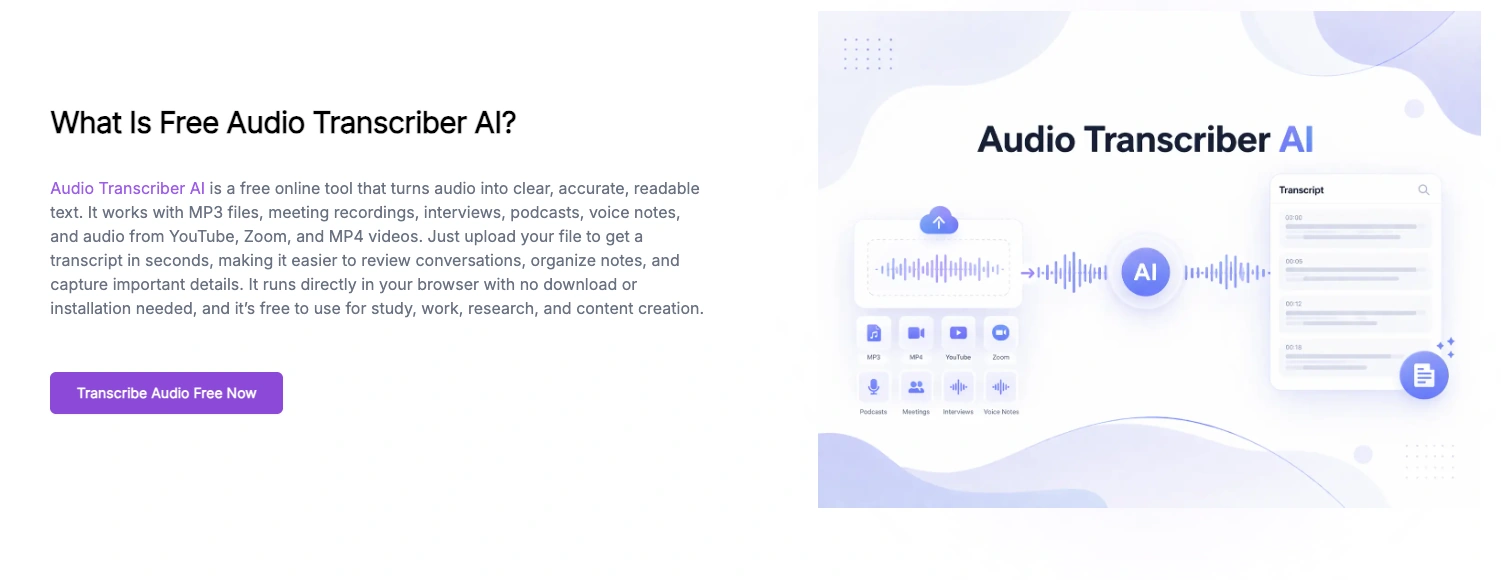
Audio Transcriber AI is a practical option when your main goal is to understand a recording through translated text. Its audio translator accepts audio and video uploads, along with direct media links, and turns spoken content into a translation you can read and reuse.
For students working through lectures or researchers reviewing interviews, that text output can be more useful than a language name alone.
Strengths
- Flexible input options: Upload common audio and video formats or provide a direct media link.
- Broad translation coverage: Offers translated text in more than 150 languages.
- Reusable text output: Copy translations or export them in formats such as TXT, Word, and Markdown.
Ideal for: Students, researchers, and content creators who want to turn foreign-language lectures, interviews, or podcasts into readable material.
AI Status: ✅ AI-powered transcription and translation — AI processes the recording and generates translated text; the described workflow does not include a live human interpreter.
2. Adobe Firefly
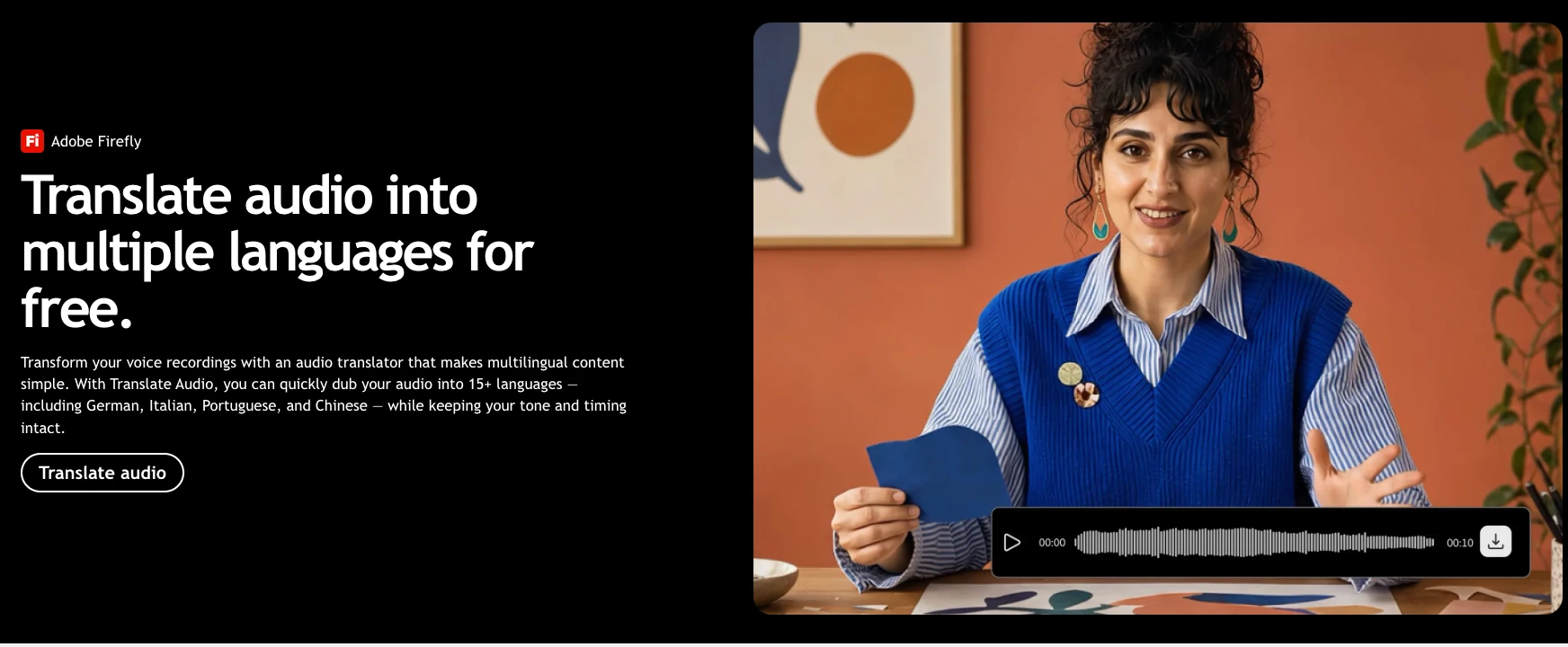
Adobe Firefly's Translate Audio feature is built for producing another language version of an existing recording. It focuses on retaining the speaker's vocal characteristics, including tone and delivery, while translating the spoken content.
This makes it particularly relevant when you want to localize narration or a creative project. Its main purpose is audio translation and dubbing, so it is better suited to producing translated content than to getting a quick language label for an unfamiliar clip.
Strengths
- Voice-preserving translation: Designed to retain the original speaker's voice, cadence, and emotional delivery.
- Multiple target languages: Supports selecting up to five translation languages at once.
- Creative production fit: Supports translation workflows involving Adobe applications such as Premiere and After Effects.
Ideal for: Video editors, marketing teams, and creators who need multilingual versions of narration, promotional content, or training materials.
AI Status: ✅ AI-powered translation and dubbing — Firefly generates translated speech using AI, with creators reviewing the output before publication.
3. Maestra AI
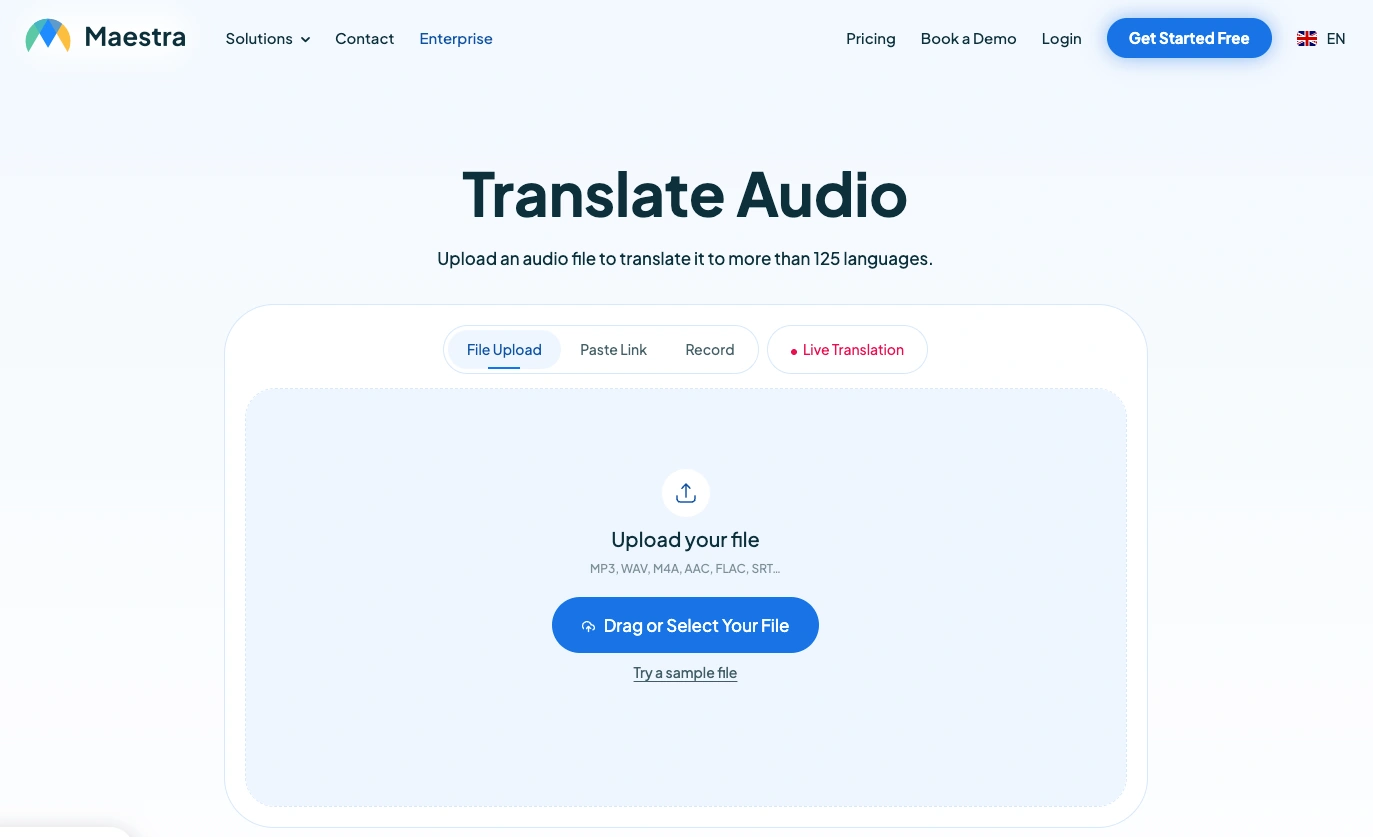
Maestra combines audio translation with tools for editing voiceovers, subtitles, and transcripts. You can upload a recording, bring in content through a supported link, or record audio, then work with the translated material before exporting it.
Its editing workflow is useful when a translation needs adjustments to names, terminology, or phrasing. For someone starting with completely unknown audio, there is an important detail: Maestra's published instructions ask you to select the source language as well as the target language. Treat it primarily as a translation and production tool.
Strengths
- Editable translations: Adjust translated text and preview the associated AI voice.
- Multiple output types: Export translated voiceovers alongside subtitle or transcript files.
- Flexible media intake: Work with uploaded files, supported links, and microphone recordings.
Ideal for: Course creators, localization teams, and video producers who need to review and refine translated content before release.
AI Status: ✅ AI generation + user editing — AI creates the translation and voiceover; users can revise the output. This does not automatically include professional human translation.
4. AudioConvert
AudioConvert is one of the more direct matches for users asking, "What language is this audio?" Its product page explicitly describes automatic source-language detection as part of its audio translation workflow.
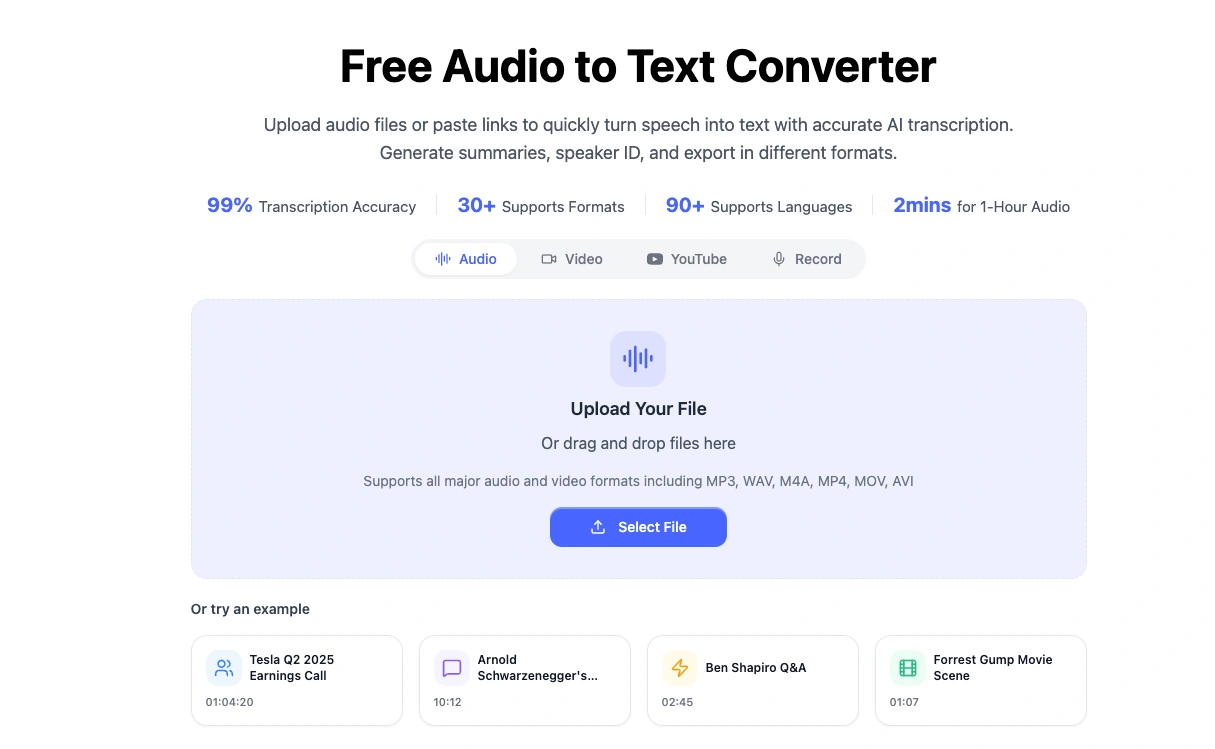
After processing, the original and translated text appear side by side, making the result easier to review. The workflow suits users who want to move from an unfamiliar recording to a readable translation without switching between separate transcription and translation tools.
Strengths
- Automatic language detection: Identifies the source language as part of audio processing.
- Side-by-side text: Displays the original transcript and translation together for review.
- Simple text export: Copy the translation or download a TXT file for further use.
Ideal for: Students reviewing foreign-language recordings, professionals processing international meetings, and creators translating interviews or podcasts.
AI Status: ✅ AI-powered detection and translation — AI detects the spoken language and generates the transcript and translation.
5. AI Dubbing
AI Dubbing focuses on creating translated speech from an uploaded recording. You choose a target language and a voice option, then preview and download the translated audio.
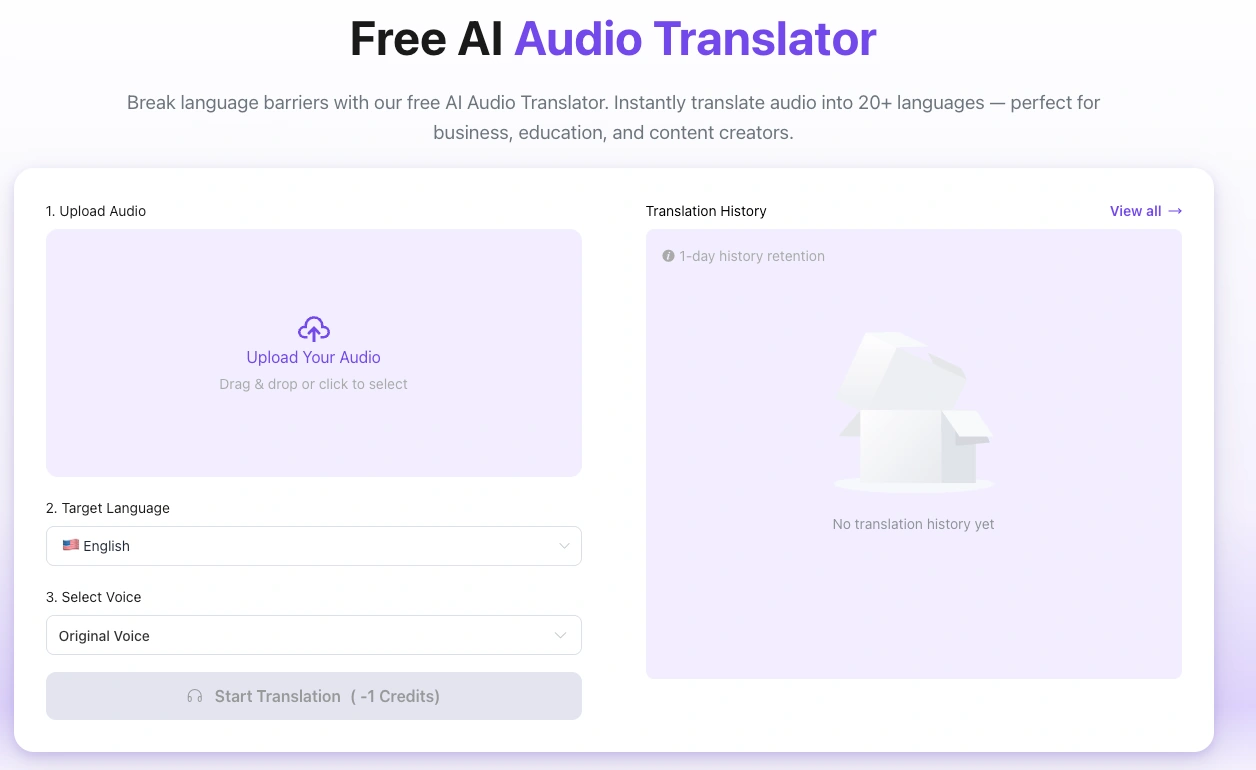
The service offers options to retain the original vocal sound or select a different AI voice. That makes it useful for adapting a tutorial, narration, or promotional clip for another audience. Its audio translation page does not clearly describe a standalone language-identification result, so its main value here is the spoken output.
Strengths
- Translated audio output: Creates spoken versions of recordings in more than 20 languages.
- Voice selection: Offers a library of more than 400 AI voices, alongside an original-voice option.
- Browser-based workflow: Upload, choose settings, preview, and download without installing desktop software.
Ideal for: Social media creators, instructors, and small marketing teams producing multilingual versions of short recordings.
AI Status: ✅ AI-powered translation and voice generation — AI translates the content and generates the chosen voice output.
6. NoteGPT
NoteGPT's AI Audio Translator offers several ways to use a translated recording. You can generate spoken audio, download text, or export subtitles, depending on whether you want to listen, study, or publish.
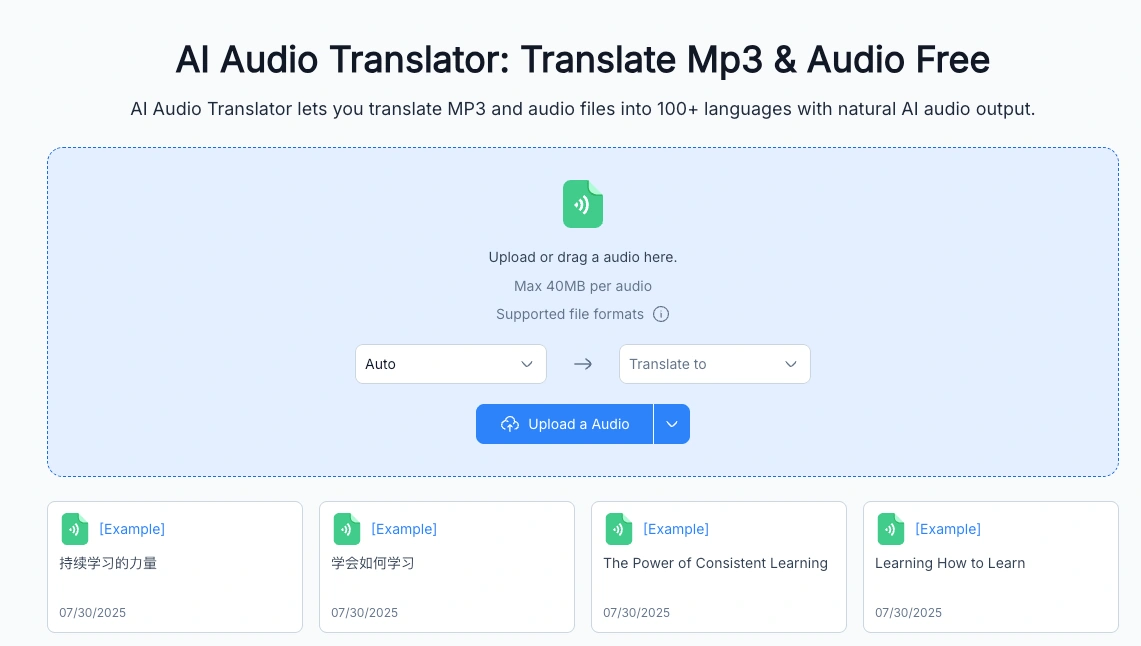
This range of output formats is useful when one recording needs to become both a listening resource and written reference material. Its interface includes a source-language selector, so users with unidentified audio should check the available settings before relying on it for automatic language detection.
Strengths
- Audio, text, and subtitle exports: Supports MP3, WAV, SRT, and TXT output.
- Broad translation coverage: Advertises translation into more than 100 languages.
- Flexible voice output: Offers options to retain the speaker's tone or use a different audio style.
Ideal for: Students, language learners, and educators who want translated recordings in both listening and reading formats.
AI Status: ✅ AI-powered translation and speech generation — AI processes the recording and produces translated audio or text.
7. ElevenLabs
ElevenLabs is relevant through its Dubbing tools, which translate recordings while aiming to preserve each speaker's vocal character. Its Dubbing API also supports automatic source-language detection when the source language is omitted, connecting language identification with audio localization.
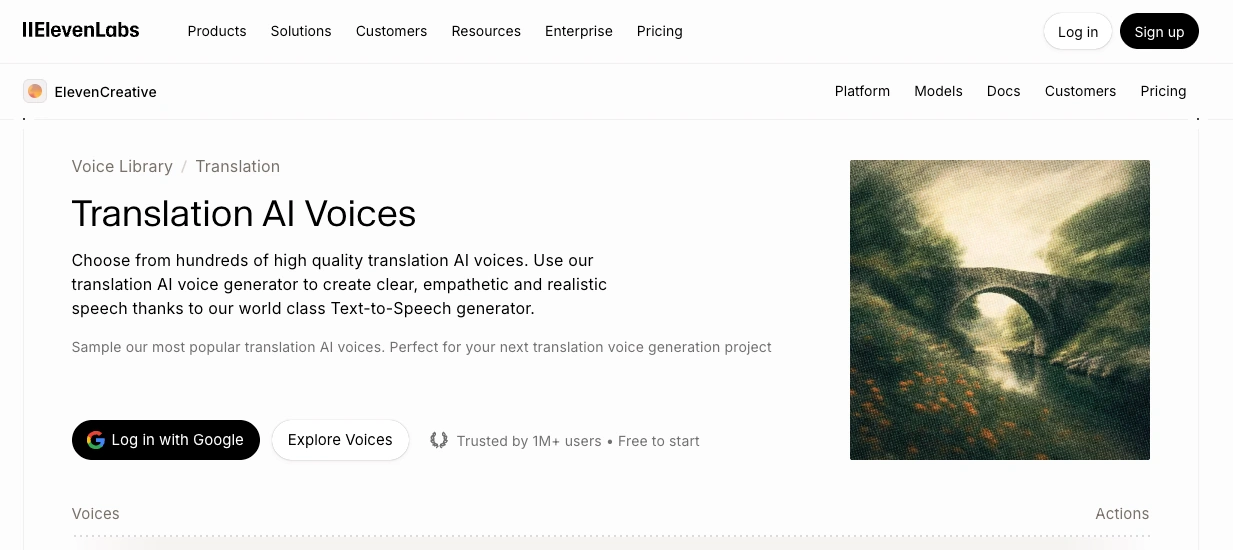
For recordings with several speakers, ElevenLabs offers speaker detection and retains the original background audio. Its Translation Voice Library serves a different purpose: selecting synthetic voices for speech generation, rather than identifying an uploaded recording.
Strengths
- Automatic source-language detection: Available within the documented Dubbing API workflow.
- Speaker-aware dubbing: Handles multiple speakers while aiming to preserve their individual vocal characteristics.
- Background audio retention: Keeps background sound as part of the translated production.
Ideal for: Podcast producers, video localization teams, and developers building workflows that turn source recordings into multilingual audio.
AI Status: ✅ AI-powered dubbing; optional human-verified service — Automated dubbing is the core workflow. ElevenLabs separately offers human-verified dubs through its managed Productions service.
8. Jumpshare
Jumpshare's AI Audio Translator helps you follow a recording through translated captions and a readable transcript. After uploading audio and choosing a target language, you can play the recording with translated subtitles in its online player.
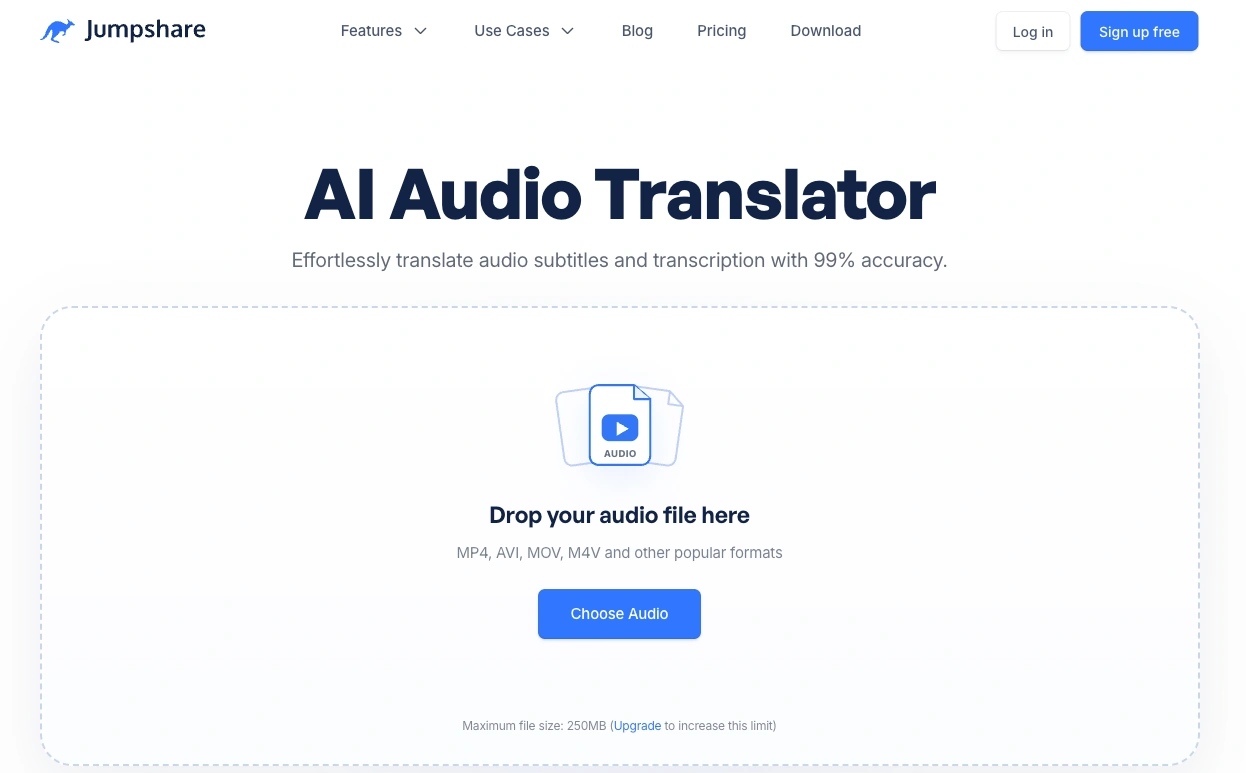
This makes it a practical option for reviewing lectures, tutorials, and meeting recordings. Its page emphasizes translated text rather than a dedicated language-identification result. It also distinguishes viewing from editing and downloading: transcript editing and download require Jumpshare Plus.
Strengths
- Subtitles during playback: Follow the original recording while reading translated captions.
- Readable transcript view: Review the translated content in the player's transcript sidebar.
- Browser-based access: Start by uploading an audio file without installing software.
Ideal for: Educators, remote teams, and professionals who want to listen to a recording while reviewing its translated text.
AI Status: ✅ AI-powered transcription and translation — AI generates the translated captions and transcript; the described workflow does not include human interpretation.
FAQs About This Problem
Can I recognize an audio language for free?
Yes, there are many audio language detection tools that offer free services, such as Audio Transcriber AI which is completely free to use.
How much audio do I need to recognize a language?
If the first result is uncertain, try another fragment containing several complete sentences.
Can a tool detect multiple languages in one recording?
It depends on the ability of the tool. Some tools primarily recognize the dominant language or primary language, while others support multilingual audio and can detect language changes within the same recording.
Can audio language detection recognize accents or dialects?
Not necessarily. Language, accent, and dialect are different recognition objects.
Does background music affect audio language detection?
Yes, loud music, background noise, overlapping conversations, and unclear speech can make language detection more difficult.
What should I do if the test results seem to be incorrect?
Try another clear part of the same recording and compare the results.
Can I detect language from the video?
Yes, it is required that the tool supports video input or can extract and analyze audio tracks from videos.
Can the detected language tell me where the speaker comes from?
No. Language detection identifies the features of spoken language; It does not determine the speaker's nationality, location, race, or identity.